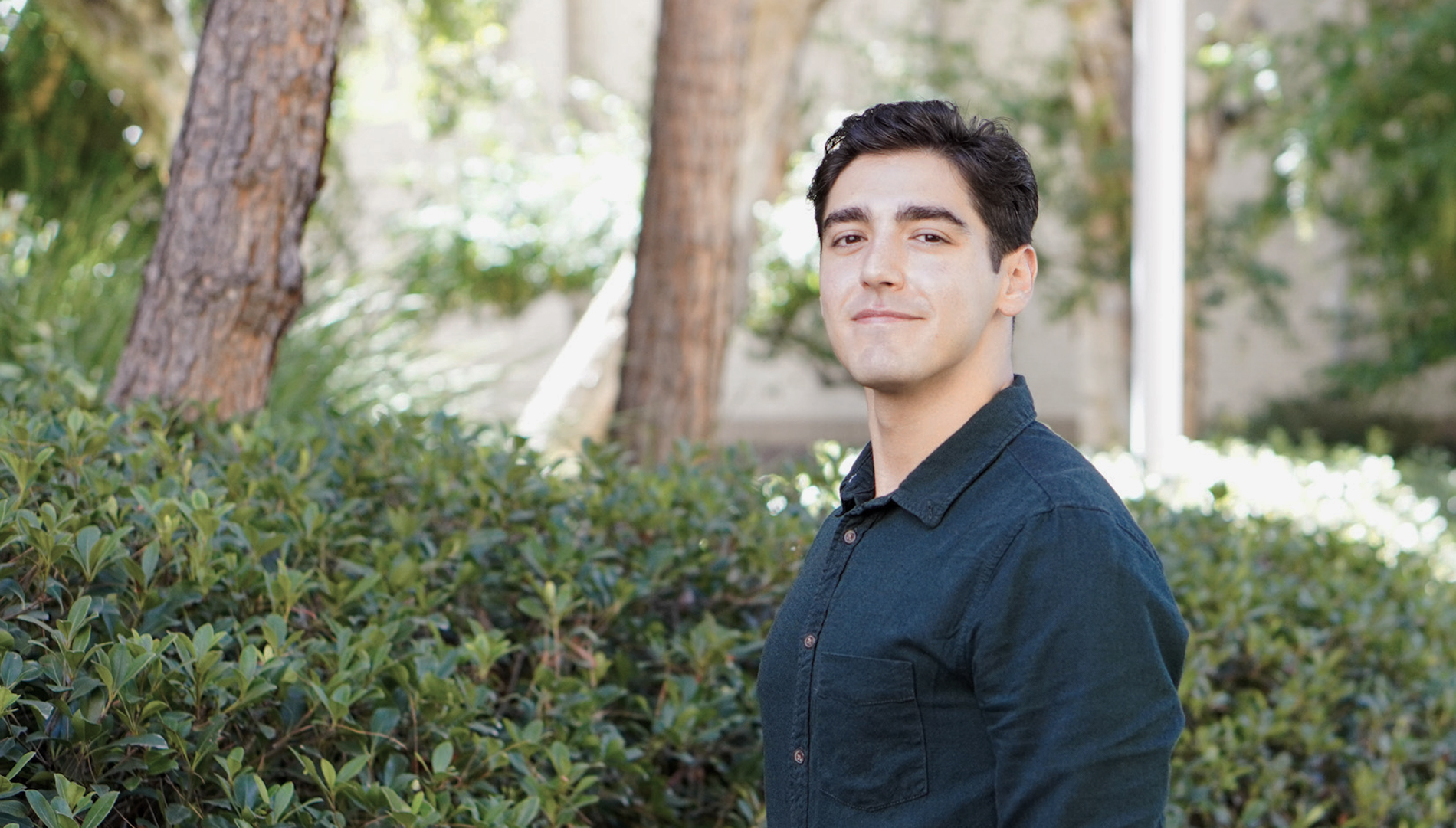
“When no legitimate, credentialed expert is available to validate a particular political position, some people turn to podcasters, influencers and other media personalities to fill the void.” — Mertcan Güngör
New study finds that when politics enter the picture, credentials take a back seat
Most Americans know what a real expert’s credentials look like: Relevant degree, years of experience and respect from peers. The problem, according to a new study recently published in Scientific Reports, is that none of it matters as much once we find out their politics.
That’s the central finding of the research led by Mertcan Güngör, Ph.D. candidate in psychology at UC Irvine. Their paper, titled “Politics matter more than credentials in laypeople's judgments of expertise,” put more than 2,400 participants through a series of experiments designed to test how ordinary people decide who to trust — and under what conditions that judgment breaks down.
The study unfolded in three parts.
In the first part, 208 participants were asked which factors they considered important when evaluating an expert on topics ranging from skincare and nutrition to abortion and police brutality. Respondents ranked attributes like relevant degrees, research experience, peer recognition, and moral character as the most important signals of expertise, Güngör and his co-authors Nathan Ballantyne and Jared B. Celniker (’22 UCI Ph.D. psychological science), of Arizona State University, found.
Superficial traits like height, looks, race and sexual orientation ranked at the bottom. So far, so rational.
The second experiment with 498 participants tested whether those stated preferences actually matched real behavior.
Using fictional expert biographies in which credentials were systematically varied, the researchers confirmed that people genuinely did trust experts more when they had relevant academic backgrounds, more experience and peer-recognized accomplishments. Weaker signals, like an Ivy League diploma or a large social media following, also influenced trust, but to a lesser degree.
Through the first two studies, the picture was cautiously optimistic: people generally know what good expertise looks like, and they respond to it accordingly.
Then came Study 3.
In the most revealing experiment, 1,776 participants read biographies of a fictional researcher who had written a best-selling book on abortion. The researcher was either highly qualified, a physician with years of research and publications, or underqualified, holding a mechanical engineering degree with minimal relevant experience.
The researcher's views on abortion were also varied: pro-choice, pro-life or left unstated.
While people still paid attention to credentials, what mattered more was their agreement with the expert’s views, Güngör noted.
“The effect of whether the expert agreed with them politically was more than twice as large as the effect of credentials, such that agreement made up for the lack of credentials and disagreement wiped out the benefit of credentials,” he explained. “A mechanical engineer who shared a participant’s views on abortion was trusted just as much as a medical doctor whose views were unknown. Conversely, a medical doctor who held the ‘wrong’ political opinion was trusted no more than a mechanical engineer with little relevant experience.”
That bias toward like-minded experts, he said, was equally strong among pro-choice and pro-life participants.
The findings add important nuance to the popular narrative of an ongoing “death of expertise,” the idea that people have broadly stopped trusting scientists, doctors and other credentialed authorities, Güngör said. “The data don’t fully support that bleak diagnosis, but they don’t offer much comfort either.”
People aren’t abandoning the concept of expertise, he said, they’re shopping for experts who already agree with them.
“When no legitimate, credentialed expert is available to validate a particular political position, some people turn to podcasters, influencers and other media personalities to fill the void,” Güngör noted.
The researchers also documented a troubling “halo effect,” when participants trusted an expert because of shared politics, they retroactively inflated their assessment of that expert’s credentials, rating their academic background as more relevant and their experience as more extensive than the biographical facts warranted.
“People can create their preferred experts not because they don’t care about expertise, but because they know what a good expert should look like,” Güngör said.
The study’s authors stop short of offering a simple fix.
Recognizing the bias, holding intellectuals accountable when they pontificate on matters outside of their area of expertise, and improving public understanding of what genuine expertise looks like are all cited as potential starting points. But, the researchers warn, the deeper challenge — decoupling trust in expertise from political identity — may prove far harder to solve than any single intervention can address.